

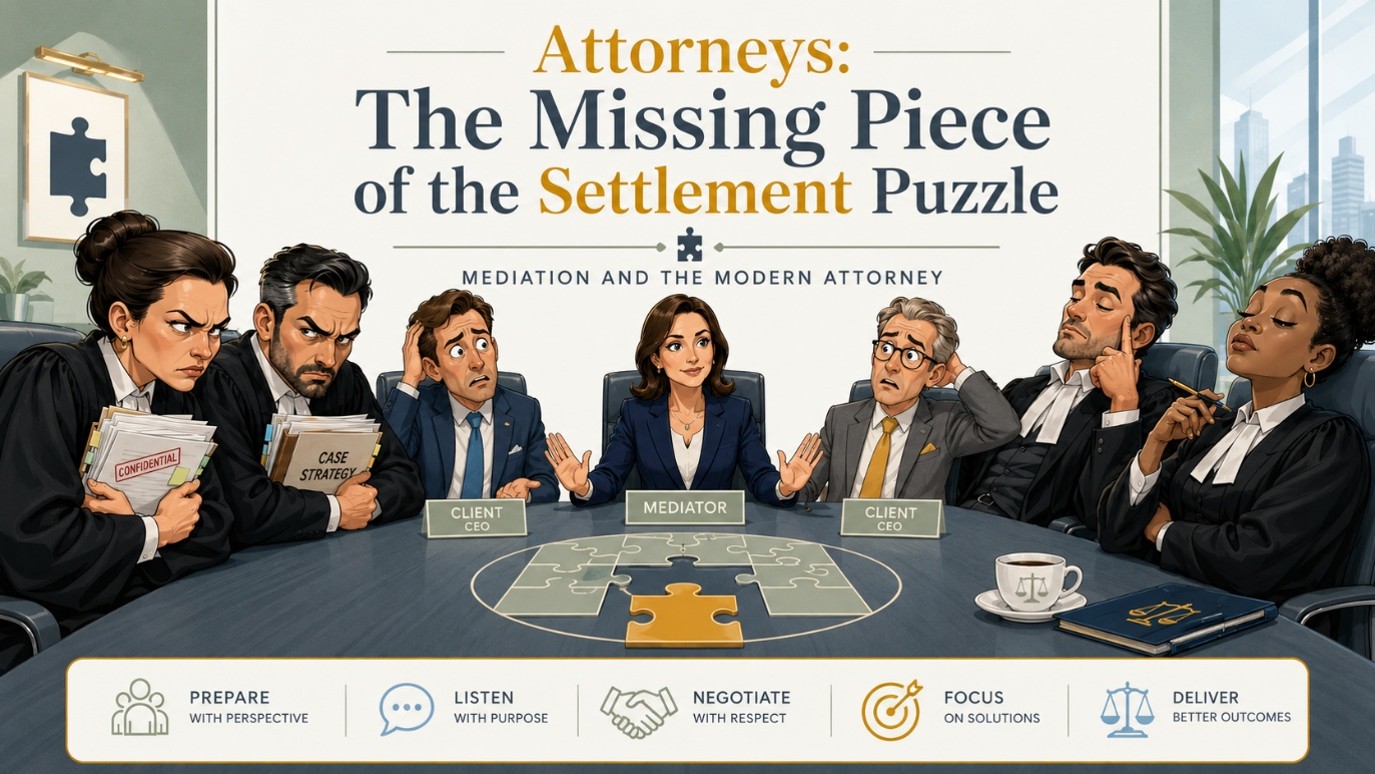
Mediation and the Modern Attorney: Why Attorney Mediation Preparation Changes Outcomes
Mediation is no longer a rarely used alternative at the margins of litigation. In modern South African legal practice, it has become an important dispute resolution process that can assist parties to narrow issues, test litigation risk, manage costs, and explore practical settlement outcomes before a dispute escalates further. For attorneys, attorney mediation preparation is now a practical part of competent dispute management, not an optional extra.
The view that mediation replaces litigation is incorrect. Mediation does not remove the need for sound legal advice. In many matters, it strengthens the litigation process by helping parties understand the real issues in dispute, the risks of proceeding to trial, the evidentiary difficulties they may face, and the opportunities for resolution before further costs, delays, and uncertainty become unavoidable.
This is where attorneys play a critical role. Proper attorney mediation preparation helps the client enter the process with clarity, realistic expectations, and a better understanding of both legal rights and settlement interests.
Mediation is most effective when it is approached as part of a broader litigation and dispute resolution strategy. It should not be treated as a casual meeting, a procedural inconvenience, or a last minute attempt to avoid trial. When attorneys prepare properly, they assist clients to participate in the process with confidence and focus.
Without a proper team approach between the client, the legal representative, and the mediator, mediation can become another meeting where settlement opportunities are missed. When parties arrive unprepared, without clear instructions, without properly assessed risks, or without realistic settlement authority, the process is often dismissed as a waste of time and money.
That is not a failure of mediation itself. It is often a failure of preparation.
The Attorney’s Role in Attorney Mediation Preparation
A mediator manages the process. The attorney protects the client’s legal position and helps the client participate meaningfully in that process. These roles are different, but they work best when they are properly understood and respected. Attorney mediation preparation begins with understanding these roles clearly. The mediator is neutral. The mediator does not give legal advice, decide the dispute, or impose an outcome. The attorney advises the client on the law, the evidence, the risks of litigation, and the consequences of any proposed settlement.
Effective attorney mediation preparation may include:
- Identifying the legal and factual issues in dispute
- Distinguishing between what is common cause and what remains contested
- Preparing the client for the purpose, structure, and limits of mediation
- Assessing litigation risk realistically
- Considering the costs, delays, and uncertainty of continued litigation
- Clarifying settlement authority before the mediation begins
- Protecting privilege and confidentiality
- Preparing a constructive opening position
- Assisting with practical, clear, and enforceable settlement terms
- Ensuring that any partial settlement records what has been resolved and what remains for determination
In this way, attorney mediation preparation turns mediation into more than a procedural step. It becomes a strategic opportunity to resolve disputes, narrow issues, reduce unnecessary costs, and assist clients in making informed decisions.
Why Attorney Mediation Preparation Matters
Attorney mediation preparation is the difference between attending a meeting and using mediation strategically. Mediation does not succeed simply because the parties attend a meeting. It succeeds when the parties are prepared, the issues are clearly understood, and the client has received proper legal advice before entering the process.
Poor attorney mediation preparation can weaken even a strong legal position. One of the most common reasons mediation fails is that the parties have not prepared adequately before the session begins. A client may arrive emotionally invested in a particular outcome, but without understanding the legal risks. Another party may arrive with no meaningful authority to settle. Attorneys may know the pleadings, but not yet have tested the practical weaknesses in the case. In those circumstances, mediation can quickly become positional, defensive, and unproductive.
Good attorney mediation preparation changes that dynamic. It allows the attorney and client to identify what must be protected, what may be negotiated, and what a commercially sensible outcome may look like. It also helps the client understand that settlement is not the same as surrender. A carefully negotiated settlement can be a strategic outcome that protects value, limits risk, preserves relationships where appropriate, and brings finality to a dispute.
Attorneys who understand mediation are better placed to guide clients through difficult settlement decisions, avoid unnecessary procedural disputes, make constructive contributions during mediation, preserve the client’s litigation position where settlement is not achieved, and convert agreement in principle into a clear and enforceable settlement.
This is particularly important in the current litigation environment, where Rule 41A and court annexed mediation processes require legal practitioners to engage with mediation in a more deliberate and informed way. Rule 41A requires parties to consider whether a dispute is capable of being referred to mediation and to indicate whether they agree to or oppose that referral. This makes attorney mediation preparation a serious procedural and strategic consideration, not merely an informal discussion outside litigation.
For readers who want more background on court annexed mediation in South Africa, the Department of Justice and Constitutional Development provides useful public information on the process and its role in improving access to justice: Court Annexed Mediation in South Africa.
Client Preparation Before Mediation
Attorney mediation preparation should also prepare the client emotionally and practically for the decisions that may arise.
Client preparation is one of the most important contributions an attorney can make to the mediation process. A client who understands the process is less likely to feel ambushed, pressured, or confused during the session. The client should know what mediation is, what it is not, what the mediator’s role will be, and what decisions may need to be made during the process.
As part of attorney mediation preparation, the attorney should also explain the difference between legal rights and settlement interests. A client may have a strong legal argument, but still face evidentiary challenges, delay, cost exposure, reputational risk, or commercial pressure. Mediation creates space to consider these broader issues. The attorney’s task is to help the client evaluate the dispute realistically, not only emotionally. This is why attorney mediation preparation should include a candid discussion about risk, evidence, costs, timing, and possible outcomes.
Before mediation, the attorney should ideally discuss possible settlement ranges, non monetary terms, confidentiality requirements, timing of performance, payment structures, future obligations, and the consequences of breach. This preparation allows the client to respond meaningfully when proposals are made, rather than making decisions under pressure during the session.
Settlement Authority and Practical Outcomes
Attorney mediation preparation must deal with authority before the mediation starts, because authority problems often derail settlement progress.
One of the most avoidable obstacles in mediation is unclear settlement authority. A mediation can lose momentum when a party is willing to negotiate but does not have authority to make decisions. This is particularly relevant where a party is a company, trust, insurer, public body, body corporate, or any other entity where instructions may need to be obtained from more than one decision maker.
Attorneys should confirm in advance who has authority to settle, what the limits of that authority are, and whether the necessary decision makers will be present or available during the mediation. This does not mean that every possible outcome must be approved before the session. It means that the client should enter the process with a clear mandate, a realistic appreciation of risk, and a practical framework for decision making. Strong attorney mediation preparation gives the client that framework.
Attorney mediation preparation should therefore include careful consideration of possible settlement wording. The end goal is not merely to reach an agreement in principle. The goal is to produce a settlement that can be understood, performed, and enforced. This is where attorney involvement remains essential. Settlement terms should be clear on who must do what, by when, in what amount, through which mechanism, and what will happen if there is non compliance.
Mediation for Modern Attorneys
Our Mediation for Modern Attorneys series is designed for legal practitioners who want to use mediation as part of serious litigation strategy, rather than as a box ticking exercise. The series focuses on attorney mediation preparation in a practical, litigation aware way, so that attorneys can add value before, during, and after the mediation process.
Future sessions will explore client preparation before mediation, effective opening statements, strategic attorney participation during mediation, the use of caucus sessions, settlement drafting, partial settlement and issue narrowing, and what to do when mediation does not result in full settlement.
Mediation is changing the litigation landscape. Attorneys who understand the process will be better positioned to serve their clients, reduce risk, and resolve disputes more effectively. For that reason, attorney mediation preparation is no longer a peripheral skill. It is an essential part of modern legal practice.
Join Our Next Free Webinar on Attorney Mediation Preparation
Do not miss our next free 60 minute webinar on 22 June 2026:
Before Mediation: Attorney Preparation That Makes the Process Work
This session will focus on the practical preparation attorneys should undertake before mediation so that the process is constructive, informed, and aligned with the client’s legal and commercial objectives. It will also show how attorney mediation preparation can improve client participation, settlement discussions, and final outcomes.
Contact us today to schedule a consultation or to reserve your place for the webinar on attorney mediation preparation.
Need Support with Mediation?
If you need an accredited mediator or require assistance preparing your client for mediation, we can help. Complete our contact form and our team will get back to you.
“`